

Sonatina in C Major
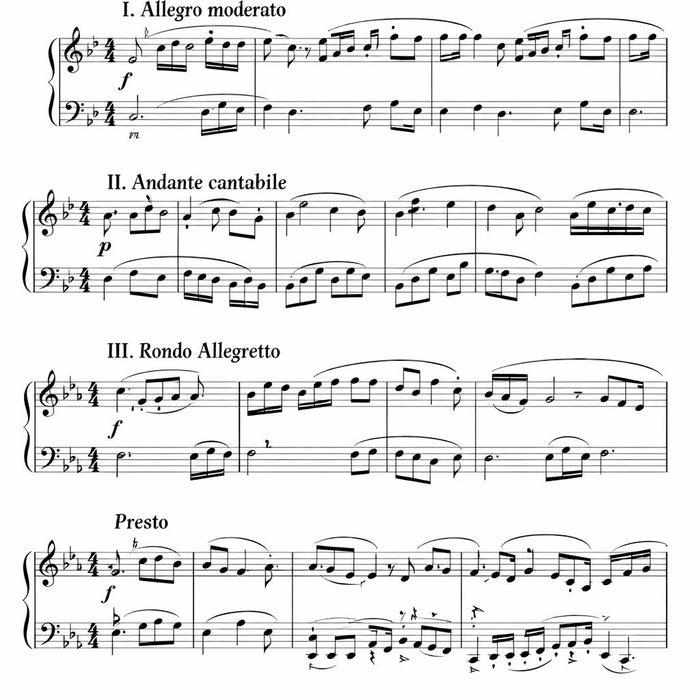

Sonatina in C Major
The Classical period — roughly 1750 to 1820 — produced the clearest, most perfectly proportioned music in Western history. Not the most emotional, not the most complex, not the most original. The most balanced. Every phrase answered by an equal phrase. Every tension resolved. Every idea stated, developed, and returned to. It is the music of a civilization that briefly believed reason and beauty were the same thing. Listening to it, you almost believe they were right.
A sonatina is a small sonata — lighter in weight, shorter in duration, closer to song than argument. Mozart wrote them for his students. Clementi wrote them as teaching pieces that outlived everything else he composed. This one is written in that tradition: three movements, C major, each one complete and self-contained, each one in its place for a reason.
The Classical style is often misunderstood as simple. It is not simple. It is clear — which is one of the most difficult things to achieve in music. Mozart's phrases are perfectly proportioned because he understood that the ear needs to breathe between ideas, that tension needs time to resolve, that a melody must complete itself before a new one begins. Haydn's humor lives in the gap between what the ear expects and what it receives — a sforzando where there should be a whisper, a fermata where there should be momentum. Beethoven's early Classical works have a coiled energy beneath their orderly surfaces — the sonata form is the container, but you can feel the pressure building against it.
This piece observes all of these principles without imitating any single composer. The Alberti bass in the slow movement is Mozartian in texture. The rondo refrain has Haydn's folkish directness. The first movement's development section has the compact harmonic logic of early Beethoven. But none of it is pastiche — it is an original piece written with a thorough understanding of why those techniques worked, and what they were trying to achieve.
The key of C major was chosen for the same reason Mozart chose it often: it is the key of clarity. No flats, no sharps. The piano's white keys. A piece in C major cannot hide behind harmonic color. It must stand on the quality of its ideas alone.
Articulation above all. The Classical style lives in articulation — the difference between staccato and portato, between legato and legatissimo, between a held note and a released one. The notes themselves are simple. What you do with the space between them is everything. A Mozart phrase played with wrong articulation is unrecognizable; the same phrase played with correct articulation sounds inevitable.
The Alberti bass (Movement II). The Alberti bass — low note, high note, middle note, high note, repeating — is the harmonic engine of the Classical slow movement. It should be felt, not heard. The left hand is present but subordinate. If the audience is aware of the left hand, it is too loud. The melody in the right hand must float above it like a voice above an accompaniment, not compete with it.
Ornamentation. The trills and mordents indicated are Classical ornaments and should begin on the upper note, not the main note — this is the period convention that distinguishes a historically informed performance from a modern one. They should be measured and unhurried, part of the phrase, not interruptions of it.
Pedal restraint. The Classical style was written for the fortepiano, an instrument with far less sustain than the modern concert grand. Use the sustain pedal sparingly — single harmony changes in the slow movement, never in the first movement's running passages. Too much pedal turns C major into an impressionist wash. The notes must be individual, clean, spoken rather than sung.
The Rondo ending. The presto coda of the third movement should feel like a surprise even when the audience knows it is coming. Resist the urge to slow down before it — the tempo should snap into presto without warning, as if the piece suddenly remembered it had somewhere to be.