Lumière Brisée Op. I

Lumière Brisée Op. I

Personal License
$19.00
30-second preview ended
Like what you heard?
Lumière Brisée Op. I
30s Preview
· Instrumental · No Vocals
Lumière Brisée Op. I
0:00 Preview · 0:30
$19.00 2 versions · MP3 · License incl.
Skip to product information
Lumière Brisée Op. I

Lumière Brisée Op. I

$19.00
License Type
How This Piece Came to Life

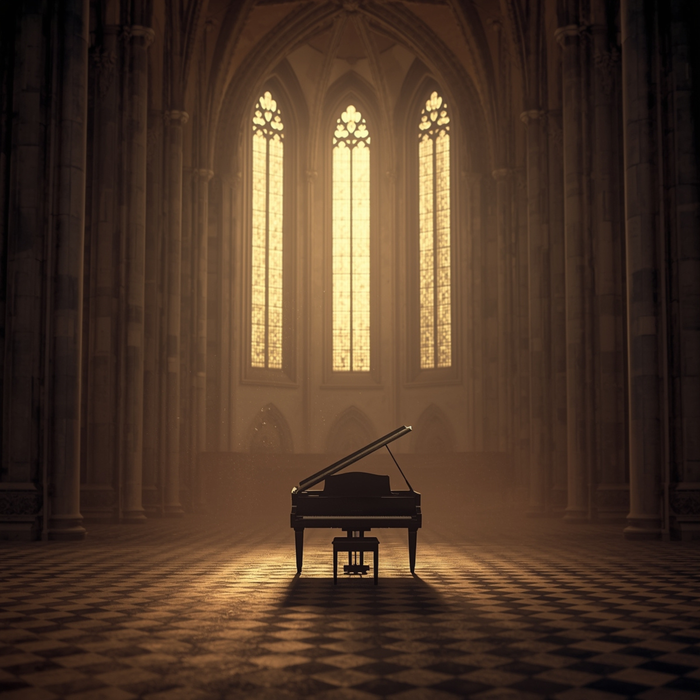
The starting point was a single image: sunlight through stained glass in an empty cathedral — not the cathedral full of people, not the ceremony, not the performance — the cathedral when no one is watching. That particular quality of broken, colored light falling across stone floors when the room belongs only to itself. Something both sacred and abandoned. Beautiful and aching at the same time.

From that image came the title. Lumière brisée — broken light — is a French term used in painting and optics for light that has been refracted, scattered, split into its component colors by passing through something transparent. A prism does it. A raindrop does it. Stained glass does it. The piece asks: what does a piano do to grief? Does it break it into colors too? Can something painful, passed through the right medium, become something luminous?

The key of D♭ major was not chosen — it was required. D♭ major is the key of Chopin's Nocturne Op. 27 No. 2, of Ravel's Pavane pour une infante défunte, of some of the warmest, most velvet piano writing in the repertoire. Five flats force the hands into a particular geography on the keyboard — the thumb and fingers fall naturally into positions that feel intimate, close, like speaking quietly in a dark room. It is the tonality of candlelight. There was no other choice.

The structure came from watching how grief actually moves — not in straight lines, not in dramatic gestures, but in the way Chopin understood it: intimate whisper first, then warmth building slowly, then a moment of almost unbearable openness, then return, then quiet. The arc of a nocturne is the arc of remembering something you loved.

"It is the sound of something beautiful happening in a room where no one is watching — and being overheard anyway."

The Meaning Behind It

Lumière Brisée is about the private life of beauty — the moments of grace that happen when no audience is present, when there is no performance, when the light falls a certain way in an empty room and something inside you responds before you know why.

The nocturne tradition, from John Field through Chopin through Fauré through Satie, has always been the tradition of the intimate and the unguarded. Nocturnes are not concert pieces in the way sonatas are. They are confessions. They are the music of what you feel at 2am when you are honest with yourself. This piece stands in that tradition without apology, and it adds one thing the tradition rarely offered: the refraction of grief into something luminous. The brokenness in the title is not damage. It is what light does when it finds the right surface.

The wide dynamic arc — from pp to fff and back to near-silence — traces the shape of a feeling that begins small, private, almost inaudible, grows into something the body cannot contain, and then subsides. Not resolved. Not healed. Subsided. The way real grief works. The final chord does not resolve to tonic with finality. It fades. This is correct. Some things do not end. They simply become quieter.

Solo Piano
♩ = 60–66 — Andante espressivo
D♭ Major / B♭ Minor
76 Bars
Op. I · 2026

You may also like