

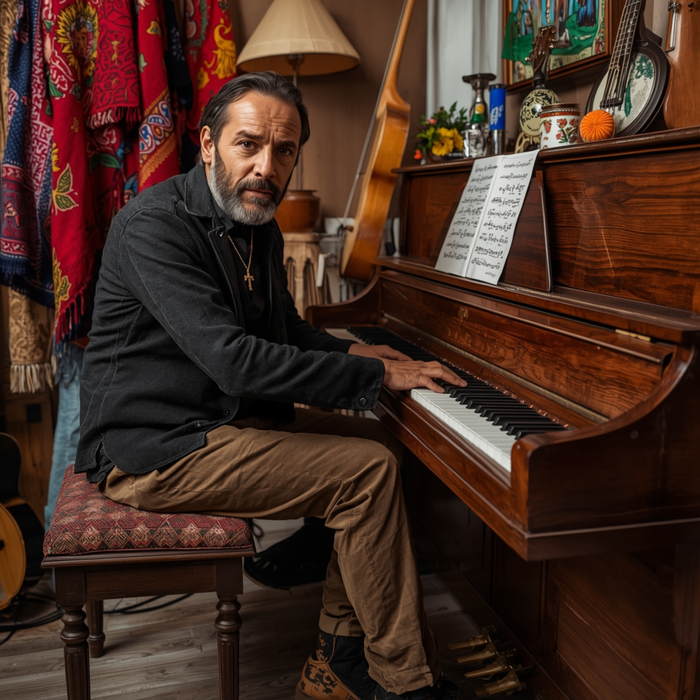

The question that generated this piece was honest and slightly arrogant: what would a pianist sound like if they spent their entire life traveling, and every country they visited left something permanent inside their hands? Not a pastiche. Not a medley. Not world music sampled and repackaged. What would the hands of someone who had genuinely studied — slowly, humbly, over years — in five different musical traditions actually play when they sat down alone at a piano?
The answer required research into five distinct traditions, not as tourist but as student. Japanese ma — the concept of meaningful silence, negative space as the primary material of art — is not a style choice. It is a philosophy that requires the performer to trust silence the way a Western musician trusts sound. West African kora playing — the flowing, cross-rhythmic 3-against-4 polyrhythm of the Mandinka griot tradition — is not an ornament. It is a fundamentally different relationship to the beat, one that makes Western 4/4 feel like a simplification. Flamenco's duende — the untranslatable Spanish concept of the dark, possessed quality that separates a great flamenco performance from a merely good one — cannot be imitated. It can only be earned through emotional truth. The American blues and Rachmaninoff sit together in this piece because they are, in the deepest sense, the same tradition: music that converts personal suffering into collective catharsis at maximum emotional volume. And French Impressionism — the tradition of Debussy and Ravel — is the tradition of finding beauty in the return, of making resolution feel like arrival rather than conclusion.
Each of these five traditions was studied seriously before this piece was written. The result is not a piece that sounds like five different pieces stitched together. It is a piece that sounds like one person who has been everywhere and brought it all home.